Saturday, January 4, 2025

Foundation Models, How they work, and why they are so important in Artificial Intelligence


Foundation Models The Backbone of Generative AI


Generative AI has transformed the way we interact with technology. From creating conversations and stories to generating images and music, this revolutionary technology is powered by Foundation Models (FMs) Large-scale machine learning models pretrained on vast datasets. In this article, we’ll break down the basics of FMs, how they work, and why they are so important in the world of artificial intelligence.

What Are Foundation Models?

Foundation Models are a type of machine learning model specifically designed to handle a wide range of tasks. Unlike traditional AI models that specialize in one task, FMs are general-purpose, capable of performing multiple tasks like text generation, summarization, chatbot interactions, and image generation.


Key Examples of Foundation Models:

FMs are typically pretrained on massive datasets using a technique called self-supervised learning or reinforcement learning, making them incredibly versatile and powerful.

How Do Foundation Models Work?

Self-Supervised Learning: A Game-Changer

Unlike traditional machine learning methods that require labeled data, self-supervised learning enables FMs to learn from unlabeled datasets. By analyzing the inherent structure of the data, the model generates its own labels, which reduces dependency on human intervention.

For example, a foundation model might predict missing words in a sentence or understand the context of words based on their placement in a dataset.

Training, Fine-Tuning, and Prompt Engineering

FMs undergo several stages of development to improve their performance:

1. Pretraining

In this stage, the model learns patterns and relationships within large datasets using self-supervised learning or Reinforcement Learning from Human Feedback (RLHF). RLHF uses feedback from humans to fine-tune the model's behavior, ensuring it aligns with human preferences.

2. Fine-Tuning

Fine-tuning enhances a foundation model's capabilities for specific tasks. By introducing smaller, focused datasets, the model can adapt to niche areas such as medical research or finance. Two common methods of fine-tuning include:

  • Instruction Fine-Tuning: Using examples to teach the model how to respond to specific instructions.
  • RLHF Fine-Tuning: Incorporating human feedback to improve performance.

3. Prompt Engineering

Prompt engineering involves crafting precise instructions for the model without altering its underlying structure. It is an efficient alternative to fine-tuning and doesn’t require labeled datasets or advanced infrastructure.

Types of Foundation Models

FMs can be broadly categorized based on their functionality:

1. Text-to-Text Models

Text-to-text models, also known as Large Language Models (LLMs), are designed to process and generate human language. They can:

  • Summarize text
  • Extract information
  • Answer questions
  • Create content like blogs or product descriptions

Natural Language Processing (NLP)


At the core of text-to-text models lies NLP, which enables machines to understand and manipulate human language. Traditional NLP involved steps like tokenization and sentiment analysis, but modern FMs bypass these steps, making the process more efficient.

Recurrent Neural Networks (RNNs)


Earlier NLP systems relied on RNNs, which store and process sequential data. While RNNs were useful, they had limitations like slow training times and an inability to parallelize tasks effectively.

Transformers The Foundation of LLMs


Transformers revolutionized FMs by allowing parallel processing of data. They consist of an encoder (to process input data) and a decoder (to generate output). Modern FMs typically use only the decoder component, enabling faster and more accurate text generation.

2. Text-to-Image Models


Text-to-image models transform written descriptions into high-quality images. Some popular text-to-image models include:

  • DALL-E 2 (OpenAI)
  • Imagen (Google Research)
  • Stable Diffusion (Stability AI)
  • MidJourney

Diffusion Architecture

Text-to-image models use a diffusion process that involves two steps:

1. Forward Diffusion: Adds noise to an image until it becomes unrecognizable.

2. Reverse Diffusion: Gradually removes noise while incorporating textual input, resulting in a new, high-quality image.

Why Are Foundation Models Important?

Foundation models are transforming industries by enabling advanced AI applications. Their adaptability and scalability make them ideal for everything from customer service chatbots to personalized content creation and even complex scientific research.

By understanding how FMs work, businesses and developers can unlock the full potential of generative AI, creating more innovative and human-centric technologies.

Foundation models are the cornerstone of modern generative AI, offering limitless possibilities for creativity and problem-solving.

Whether you’re a beginner or an experienced developer, understanding the basics of FMs can open the door to exciting new opportunities in artificial intelligence.

Machine Learning
Large Language Models


Friday, January 3, 2025

AI Powered Brain Computer Interface Decodes Speech in real-time from Brain Signals


World’s First Mind-to-AI Large Model Dialogue

Decoding Chinese Speech with Brain-Computer Interface in real-time from brain signals


A Chinese startup has achieved a groundbreaking milestone in the field of brain-computer interface (BCI) technology, successfully decoding Chinese speech in real-time from brain signals.

This breakthrough has the potential to revolutionize the lives of individuals with speech impairments and open up new avenues for human-computer interaction.

The Power of BCI

Bridging the Gap Between Brain and Machine

BCI technology allows for direct communication between the brain and external devices, bypassing the need for traditional physical interfaces like keyboards or voice commands.

This is achieved by implanting a device that records brain signals, which are then decoded by sophisticated algorithms to understand the user’s intentions.


Decoding Chinese Speech

A Complex Linguistic Challenge

The recent breakthrough by NeuroXess, a Shanghai-based startup, focused on decoding Chinese speech, a particularly complex task due to the language’s unique characteristics. Unlike alphabetic languages like English, Chinese is monosyllabic, tonal, and logographic, requiring the use of more brain regions for processing.

AI’s Crucial Role

Training Neural Networks to Understand Brain Signals

Artificial intelligence (AI) plays a vital role in deciphering the complex neural patterns associated with speech. NeuroXess researchers trained a neural network model using electrocorticogram (ECoG) features extracted from the high-gamma band of brain signals. This high-frequency band (70-150 hertz) is known to correlate with complex cognitive functions, including movement and sensory information, making it ideal for decoding intentions.

Clinical Trials Show Promising Results

In a clinical trial, a patient with a tumor in the language area of the brain received a 256-channel BCI implant. Within five days, the patient achieved 71% speech decoding accuracy using 142 common Chinese syllables, with a decoding latency of under 100 milliseconds per character. This marks the highest level of real-time Chinese speech decoding achieved in China.

Beyond Speech Expanding the Possibilities of BCI

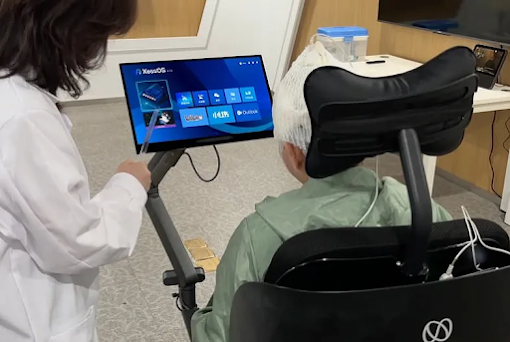
The potential applications of BCI technology extend far beyond speech decoding. NeuroXess’s BCI device has also been successfully used to control software, operate smartphones, control smart home systems, and even maneuver a wheelchair, all through brain signals. In another clinical trial, a patient with a brain injury used the BCI to control robotic hands, grasp objects, and even perform sign language.

The company envisions a future where BCI technology empowers individuals with speech or motor function disabilities resulting from conditions like Amyotrophic Lateral Sclerosis (ALS), high-level paraplegia, and stroke.

Mind-to-AI Dialogue A Glimpse into the Future


Perhaps the most exciting prospect is the potential for direct communication between the human mind and AI models.

NeuroXess has demonstrated the world’s first "mind-to-AI large model" dialogue, where a patient used the BCI to control a digital avatar and interact with an AI model. This breakthrough opens up possibilities for seamless integration between human thought and advanced AI systems.

While BCI technology is still in its early stages, these recent advances demonstrate its immense potential to transform human lives and redefine the boundaries of human-computer interaction. The future holds exciting possibilities as AI continues to play a critical role in unlocking the secrets of the human brain and translating thoughts into actions.

Sunday, December 29, 2024

Explore DeepSeek V3 The Most Powerful Open-Source AI Yet!

DeepSeek-V3 Pioneering the Future of Open-Source AI

Open-Source AI with Revolutionary Mixture-of-Experts Architecture


DeepSeek V-3

DeepSeek-V3, released by the Chinese AI firm DeepSeek, is a groundbreaking open-source large language model (LLM) that features an impressive architecture and capabilities, setting new standards in the AI industry.

Overview and Architecture

DeepSeek-V3 boasts 671 billion parameters, utilizing a Mixture-of-Experts (MoE) architecture.

MoE

This innovative design activates only 37 billion parameters for each task, optimizing computational efficiency while maintaining high performance. The model employs Multi-head Latent Attention (MLA) and DeepSeekMoE architectures, enhancing its ability to process tasks quickly and accurately.

Multi-head Latent Attention
DeepSeek MoE

It was trained on 14.8 trillion tokens, utilizing techniques like supervised fine-tuning and reinforcement learning to ensure high-quality output.

Key Features and Functionalities

  • Text-Based Model: Primarily designed for text processing, DeepSeek-V3 excels in coding, translation, and content generation.
  • Efficiency: The MoE architecture allows for selective activation of parameters, reducing resource consumption and improving processing speed.
  • Performance: Internal evaluations indicate that DeepSeek-V3 outperforms other models like Meta’s Llama 3.1 and Qwen 2.5 across various benchmarks, including Big-Bench High-Performance (BBH) and Massive Multitask Language Understanding (MMLU).
  • Load Balancing: The model incorporates advanced load-balancing techniques to minimize performance degradation during operation.

Technology and Framework

DeepSeek-V3 is built on a robust technological foundation that includes:

  • Mixture-of-Experts Architecture: This allows the model to dynamically select which parameters to activate based on the input task.
  • Training Infrastructure: The model was trained over 2.788 million hours using Nvidia H800 GPUs, showcasing its resource-intensive training process.
  • Open Source Availability: DeepSeek-V3 is hosted on Hugging Face, making it accessible for developers and researchers to utilize and modify.

Use Cases

DeepSeek-V3 can be applied across various domains:

  • Education: Assisting in tutoring systems and generating educational content.
  • Business: Automating customer support through chatbots and generating reports.
  • Research: Aiding in data analysis and literature reviews by summarizing large volumes of text.

Availability

The model is available on Hugging Face under an open-source license, promoting accessibility for developers and enterprises looking to integrate advanced AI capabilities into their applications. This approach encourages innovation while allowing users to adapt the model for specific needs.

Future Prospects

As AI technology continues to evolve, DeepSeek-V3 represents a significant step towards cost-effective and efficient AI development. Its open-source nature could inspire further advancements in the field, potentially leading to more sophisticated models that incorporate multimodal capabilities in future iterations.

The focus on efficiency and performance positions DeepSeek-V3 as a strong contender against both open-source and proprietary models, paving the way for broader adoption in various industries.

DeepSeek-V3 exemplifies the potential of open-source AI models to challenge established players while providing accessible tools for developers worldwide. Its innovative architecture and robust performance metrics make it a noteworthy addition to the landscape of artificial intelligence.


Ai Model
 

Saturday, December 28, 2024

Boost Your Coding Efficiency: Best Open-Source AI Tools for Developers

Top Open-Source AI Coding Tools to Boost Developer Productivity

Must-Try Open-Source AI Coding Tools


Open-Source Coding Agents

The world of programming and artificial intelligence (AI) is evolving rapidly, with open-source tools leading the charge in innovation.

Developers and organizations are increasingly leveraging open-source AI coding agents to streamline workflows, improve productivity, and deliver robust software solutions. Here, we explore some of the most impactful open-source AI coding agents that are shaping the future of development.

Open Interpreter

Open Interpreter allows developers to seamlessly integrate natural language processing capabilities into their code. It bridges the gap between human communication and machine understanding, enabling intuitive interaction with programming environments.

Maige

Maige is a versatile tool that simplifies automation and enhances collaboration for coding tasks. Its intuitive interface and advanced natural language AI capabilities make it a go-to choice for developers seeking efficiency.

Sweep AI

Sweep AI specializes in automating repetitive coding tasks, enabling developers to focus on higher-value problem-solving. It integrates effortlessly with multiple platforms, streamlining workflows across the board. Sweep understands your entire codebase to automate simple tasks like writing tests, fixing bugs, and more.

WorkGPT

WorkGPT combines the power of GPT-based intelligence with task management tools to create a collaborative coding environment. It excels in project planning and code documentation, making it ideal for team-based development.

WrenAI

WrenAI Cloud enables your data team to effortlessly convert natural language queries into actionable SQL. Get instant answers from any database, unlocking valuable insights that drive smarter, faster decisions for business growth.

Vanna.AI

Vanna.AI Let write your SQL queries for you. With Vanna.AI, you can quickly gain actionable insights from your database simply by asking questions in natural language. No need for complex coding or SQL expertise—just ask, and Vanna.AI instantly generates the precise query you need. Empower your team to make data-driven decisions faster, unlocking valuable business insights with ease.

DemoGPT

DemoGPT DemoGPT is an open-source tool designed to streamline the development of Large Language Model (LLM) applications. It leverages GPT-3.5-turbo to automatically generate LangChain code and transform user instructions into interactive Streamlit applications. This tool simplifies the coding process, allowing users—regardless of technical expertise—to create functional applications quickly through prompts.

Aide

Aide is a powerful coding companion that enhances code generation and optimization. It supports multiple programming languages and focuses on improving code readability and performance.

Smol Developer

Smol developer is a tool that functions as a "junior developer," helping users create applications by generating code from product specifications. It can scaffold entire codebases or provide building blocks for existing projects through interactive prompts. Supporting various modes like Git repository, library, and API, it allows developers to maintain control while leveraging AI assistance for coding tasks.

bloop.ai

Bloop ai modernizes legacy code by converting COBOL to Java while ensuring identical functionality. It uses an AI test suite for validation and produces human-readable code that can be easily modified. Supporting continuous delivery, it operates offline and boosts developer productivity by up to 55%, with all training code available for commercial use.

Automata

Automata repository aims to evolve into a fully autonomous, self-programming AI system. It is based on the concept that code acts as a form of memory, allowing AI to develop real-time capabilities and potentially lead to the creation of Artificial General Intelligence (AGI).

Continue

Continue is a custom AI code assistant designed to enhance productivity in software development. It features a plug-and-play system that integrates seamlessly with existing tech stacks, allowing developers to accelerate their coding processes.

GPT Migrate

GPT Migrate project is designed to facilitate the migration of codebases between different programming languages or frameworks. It leverages large language models (LLMs) to automate the process, which can be complex and time-consuming.

GPT Engineer

GPT Engineer is a tool designed to help users quickly build software applications by simply describing their ideas in natural language. It allows for rapid prototyping, enabling non-technical users to create functional applications without extensive coding knowledge.

CodeFuse

CodeFuse myChatBot is an open-source AI assistant developed by the Ant Group’s CodeFuse team, aimed at simplifying and optimizing the software development lifecycle. It integrates a multi-agent scheduling mechanism with a rich library of tools, codebases, and knowledge bases to effectively handle complex tasks in DevOps.

Stackwise

Stackwise is an open-source AI toolset on GitHub offering applications like image rendering, video animation, and PDF question-answering. It streamlines workflows, enhances productivity, and fosters innovation in the developer community. Ideal for integrating advanced AI into scalable projects.

Sourcegraph Cody AI

Sourcegraph Cody AI excels in code navigation and review, making it easier for developers to understand and edit large codebases efficiently.

Cody

Cody Cody is an AI assistant that allows you to interactively query your codebase using natural language. Leveraging vector embeddings, chunking, and OpenAI's language models, it helps you navigate and understand your code efficiently and intuitively.

ReactAgent

ReactAgent is an experimental autonomous agent powered by the GPT-4 language model, designed to generate and compose React components from user stories. Built with React, TypeScript, TailwindCSS, Radix UI, Shadcn UI, and the OpenAI API, it streamlines the development process for modern web applications.

GPT Pilot

GPT Pilot explores how effectively large language models (LLMs) can generate production-ready apps with minimal developer input. The goal is for AI to handle up to 95% of the coding, leaving the remaining 5% for developers to oversee and fine-tune until full AGI is achieved.

English Compiler

English Compiler translates natural language into functional code, making coding accessible to non-developers. It’s a groundbreaking tool for empowering people without technical backgrounds.

AutoPR

AutoPR automates the process of creating pull requests, ensuring seamless collaboration and integration within coding teams. Its AI-driven features help maintain consistency and quality.

Open-source AI coding agents are revolutionizing the way developers approach software creation. By automating repetitive tasks, providing intelligent suggestions, and enhancing collaboration, these tools empower developers to achieve more in less time.

Whether you’re working on a small personal project or a large-scale enterprise solution, these AI agents are indispensable for modern development.

To stay ahead in the tech landscape, keep exploring and experimenting with these tools. They’re constantly evolving and have the potential to transform your coding journey!

How to Get £7,000/Year with the Newcastle University Vice-Chancellor’s Scholarship 2027

Newcastle University Vice-Chancellor’s International Scholarship 2027: Complete Overview, Eligibility & Application Guide Newcast...